
Cowichan Valley
Moss in the Frames, Not on the Glass
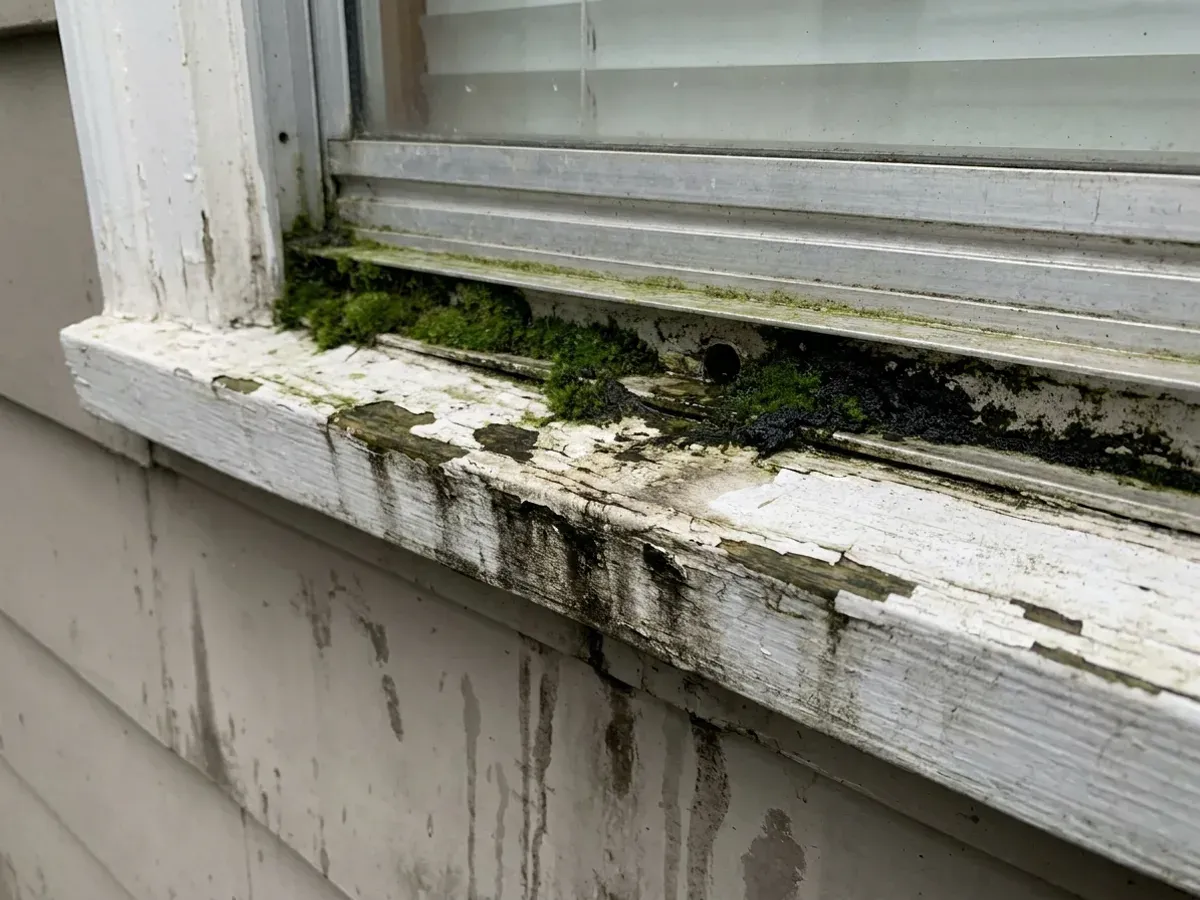
The growth that damages a window lives in the channels, sills and weep holes where water is supposed to drain out.
- Weep holes reopened so frames drain the way they were designed to
- Growth cleared out of sash channels, tracks and exterior stops
- Soft spots and failing seals flagged while they are still small
- Hand tools only, so water is never driven past the frame seals
- Shaded and north-facing windows treated as the priority they are
Most people picture window moss as a green haze on the glass. It rarely is. Glass is smooth, non-porous and gets wiped by every rainstorm, so almost nothing establishes on it.
The growth that matters is a few centimetres away, in the frame. It sits in the channels the sashes slide in, along the exterior sill, in the corners where the frame meets the trim, and in the small drainage openings at the bottom of the frame. Those are damp, sheltered, full of grit and dust, and shaded by the frame itself. As far as moss is concerned, they are ideal.
What Weep Holes Do
Modern windows are not built to keep every drop of water out of the frame. They are built to let water that gets in drain back out. Those small slots or holes along the bottom of the exterior frame are weep holes, and they are the drain.
When a weep hole blocks, the frame stops draining and starts holding. Water sits in the bottom channel with nowhere to go, and it sits there through a Cowichan Valley winter where the wet stretch runs from roughly October into March. Everything that follows comes from that standing water.
Moss is very good at blocking weep holes, because a weep hole is exactly the kind of small, permanently damp cavity it likes. Add needle debris off a Douglas fir or cedar overhead and the blockage packs in tight.
What Standing Water Does to Each Frame Type
The consequence depends on what your windows are made of.
Wood frames rot. Water held against the bottom of a wood frame keeps it saturated, paint or stain fails from behind, and the wood goes soft at the corners and along the sill. By the time you can push a thumbnail into it, the repair is carpentry rather than cleaning.
Vinyl frames do not rot, but they are hollow and welded, and water trapped in the chambers has to go somewhere. It works into the sealed unit at the glazing edge, and once that seal fails you get the permanent fog between the panes that no amount of cleaning removes. The whole sealed unit gets replaced at that point.
Aluminium frames handle water better but conduct cold, so they run with condensation on the inside during our damp months. That condensation drains to the same channels that are already blocked, and where dissimilar metals and fixings sit in constant moisture, corrosion follows and sashes stop running properly.
The Signs Worth Looking For
You can check this yourself from outside, at ground level, on any window you can reach.
- Green or dark growth on the exterior sill, especially at the outer corners.
- A soft mat of moss in the channel the sash slides along.
- Water sitting in the bottom of the frame a day after rain rather than draining away.
- Paint blistering or lifting on the lower rail of a wood frame.
- Fog or moisture between the panes of a sealed unit.
- A sash that has become stiff to slide or no longer seats cleanly when closed.
North-facing windows and anything under a wide eave, a covered porch or overhanging branches will show it first, because those are the ones that never get direct sun or a drying breeze.
A Maintenance Job Now or a Replacement Later
This is the argument for dealing with it early, and it is a straightforward one. Clearing moss out of a channel and reopening a weep hole is routine work on a ladder. Replacing a rotted wood sill or a fogged sealed unit is a different scale of job entirely, and it involves a joiner or a glazier rather than a cleaning visit.
The frustrating part is that the early stage is invisible from inside the house. Nobody notices a blocked weep hole. They notice the soft sill three winters later, and by then the window has been sitting full of water every wet season since.
How the Work Is Done
Frame work is detail work, and it is done by hand. Growth comes out of the channels and off the sills with brushes and picks sized for the profile, not with a pressure washer that would drive water past the seals and straight into the wall assembly.
Weep holes are cleared individually and then checked to confirm they are actually draining, because a hole that looks open at the face can still be packed solid behind. Tracks and channels get flushed gently and wiped out so grit does not go back into a seal or under a sash. Exterior stops, corners and the underside of the sill get the same attention as the visible face, since that is where growth hides.
Wood frames get looked over for soft spots while we are there and you get told what we find, whether that is good news or not. Vinyl and aluminium frames get checked for seal condition and drainage the same way.
It is unglamorous work on a small scale, and it is one of the few maintenance jobs on a house where an hour of attention genuinely decides whether a window lasts.
How we do it
- 01
Frame by frame inspection
We go around the house and check sills, channels, stops and weep holes rather than the glass. Frame material, aspect and overhead cover all change how a window is handled.
- 02
Removing growth by hand
Moss and algae come out of the channels and off the sills with brushes and picks matched to the profile. No pressure washing is used anywhere near a window, since it forces water past seals and into the wall.
- 03
Clearing and testing the weep holes
Each weep hole is cleared through and then tested with water to confirm it drains rather than just looking open. A hole packed solid behind the face is the most common thing missed.
- 04
Flushing tracks and wiping down
Channels and tracks are flushed gently and wiped out so grit is not left to work into a seal or under a sash. Sashes are checked to confirm they still run and seat properly.
- 05
Reporting what we found
You get told which frames are sound, which have soft wood or a failed seal, and which windows will need looking at again soonest. Nothing gets glossed over to make the job look tidier.
Window Moss Removal across the valley
We cover the whole Cowichan Valley. Pick your community to see what the conditions are like there.
Window Moss Removal — common questions
There is no moss on my glass, so why would I need this?
Because the growth that causes damage is almost never on the glass. It lives in the frame channels, the exterior sill and the weep holes, where it stays damp and sheltered. A window can look perfectly clean from inside while the bottom of its frame is holding water.
What is a weep hole and how do I know if mine is blocked?
It is the small slot or opening along the bottom of the exterior frame that lets water drain back out. If water is still sitting in the bottom channel a day after rain, or you can see moss and packed debris at the opening, it is blocked. Pouring a little water into the channel and watching whether it drains is a fair test.
Can I not just blast the frames with a pressure washer?
That is one of the quicker ways to cause a leak. Pressure drives water past the frame seals and into the wall assembly behind, and it can damage the glazing seal on the sealed unit. Frame work is done with hand brushes and picks for that reason.
My windows are vinyl, so there is nothing to rot. Does this still matter?
Yes, the failure just takes a different form. Vinyl frames are hollow, and trapped water works into the glazing edge and eventually breaks down the seal on the double-glazed unit. That is the permanent fog between the panes, and it means replacing the unit rather than cleaning it.
Which windows on my house are most at risk?
North-facing ones, anything under a deep eave or covered porch, and any window with branches over it. Those never get direct sun or much moving air, so the frames stay damp right through our wet season and the growth in the channels never dries out.
Get the moss off before the winter rain sets in
Free quotes across the Cowichan Valley. Tell us about your roof and we will tell you what it needs.